By Emilia Podesta
Hi, I’m Emilia, a UCLA fourth year in Disability Studies and Public Affairs and Website Accessibility Engineer with the DCP. I have been raising guide dog puppies-in-training for Guide Dogs for the Blind (GDB) for the past ten years. When I was ten and at a swim meet I saw someone raising a guide dog puppy and immediately fell in love with the idea of doing the same. It took a lot to convince my parents, but in the end, we went through the training and became a puppy raiser family! While it is always hard to say goodbye to a puppy you’ve been raising for the past year and a half, I always know that this work is for a bigger purpose, and that this dog isn’t mine but meant to change someone else's life. Lets get into some quick facts!
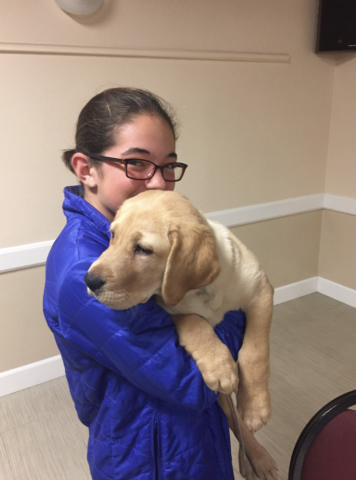
Me at age 10, at my first meeting!
GDB services the West Coast of the US.
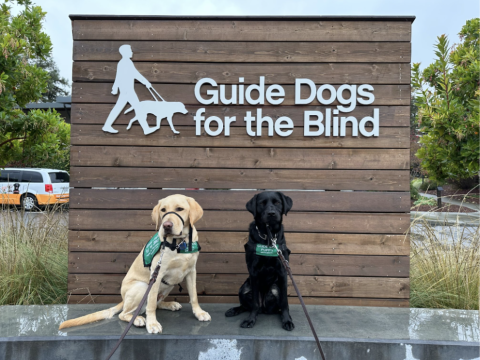
Guide Dogs for the Blind (GDB) is a robust guide dog school that serves the West Coast of the United States. GDB was established in 1942 in San Rafael, CA in the San Francisco Bay Area and currently has about 2,000 working guide dog teams. They have about 3,000 volunteers at any one time, and receive zero government funding.
Volunteer puppy-raisers raise GDB puppies from about 2 months old to 18 months old.
Guide dog puppies are born on the San Rafael campus and live there with their mom until they are about 10 weeks old (just over 2 months). Then they are placed in their puppy-raisers' home. After they have grown they are brought back to the GDB campus for formal training.
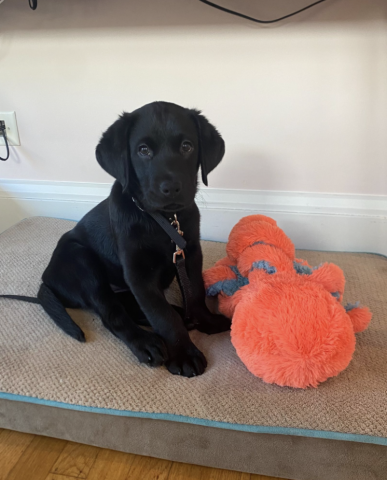
Puppy-raisers do foundational basic obedience, not specific service training.
In the beginning, the puppies just learn basic household, etiquette, and social skills. They learn things like socialization, standard commands (sit, down, wait), and making sure the puppy builds confidence!
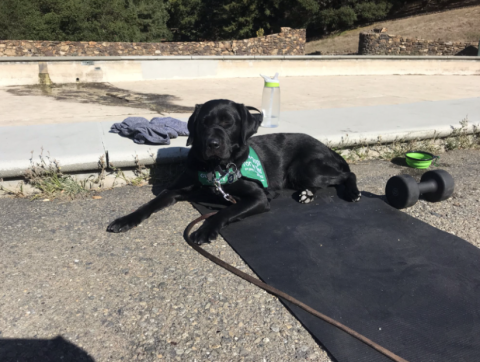
On average, GDB puppies have a 50% success rate.
The puppies can end up with a wide variety of service jobs. For example, my family has raised 10 dogs, but only about 5 have become working/service dogs.These dogs have become 1 hearing assist dog, 3 guide dogs, and 1 breeder.
If a guide dog puppy fails, it can be career-changed for another job!
If the guide dog puppy doesn’t pass its training, they can be career changed to anything from other service jobs to therapy animals to ambassador dogs to just very well trained pets! No matter what, it is up to the dog to decide what path is right for them.
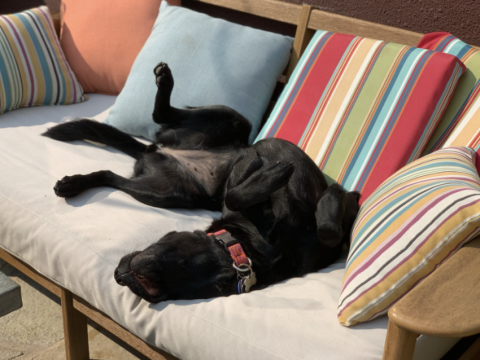
Each litter born at GDB is assigned a litter letter that all that litter’s puppies’ names start with!
No active working guide dog or puppy-in-training can have the same name at any given time. Because of this the names have to get very unique and interesting! To keep this orderly, the organization cycles through the alphabet and each litter is assigned a letter for all of the puppies’ names. With only 26 letters in the alphabet, names have to get pretty creative, especially with the less common letters. Some fun and unique names I have come across include:Jingle the fourth, Navette, Keeper, Doreen, and Jamboree! If a puppy gets “career changed” then their name can be reused by GDB.
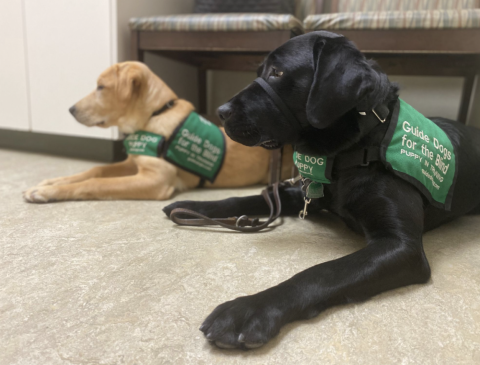
Never touch (or even take pictures of) a guide dog when wearing a vest or working without permission
It is very important to ignore a working guide dog because even eye contact can be a distraction to them. Additionally, touching or taking a picture of someone's guide dog can be thought of as touching or taking a picture of an individual just walking down the street. This is generally interpreted as a disrespectful invasion of someone’s privacy and breach of boundaries. Some handlers are open to having their dog photographed with permission and/or releasing them from their working status to interact with people. You may always politely ask, but always be respectful of the answer.
Guide dogs are taught a unique skill called intelligent disobedience.
Guide dogs (those who guide people who are blind or low vision) are taught a lot of stringent skills to best service their handler. However, they are also taught a unique skill called “intelligent disobedience” where the dog is trained to make a conscious decision to disobey the given command when it would result in an unsafe situation. For example, if a dog is commanded to walk across a street when a car is approaching, the guide dog is taught to disobey. This is a very impressive and difficult skill that sets guide dogs apart.
Guide Dogs for the Blind only breeds and trains labradors and golden retrievers.
GDB uses these breeds of dog because they are highly trainable and easily able to adapt to new environments. They are also very food motivated and eager to please humans. In the past German shepherds were a common guide dog breed, but they would get too attached to their puppy-raisers.
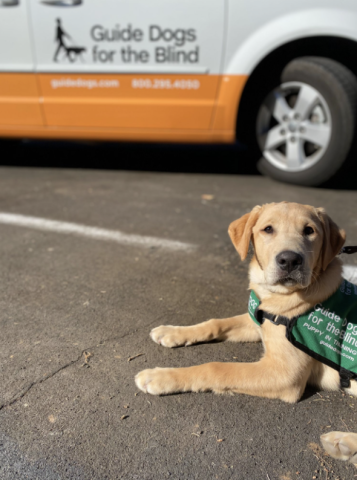
There is currently a shortage of puppy-raisers in the US!
The shortage means it’s more important than ever to become a volunteer. To become a puppy-raiser, people must find a local chapter of the organization, attend meetings, and do practice puppy-sits. GDB provides gear, pays vet bills, and gives support in this opportunity.
Conclusion
Raising a guide dog puppy means loving a dog fully while knowing from day one that you're helping prepare them for something bigger. Whether a puppy goes on to guide, assist, or become a well-loved pet, every one of them carries the lessons of the home that raised them. If this made you curious, I hope you'll consider finding your local GDB chapter and joining the puppy-raising community. The work is hard, the goodbyes are bittersweet, and it is some of the most rewarding volunteering I've ever done.